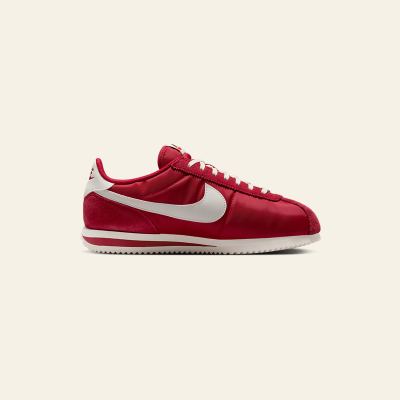
The Nike Cortez was designed by Bill Bowerman in 1967 and released under the Nike name in 1972, making it one of the brand’s oldest silhouettes still in production today. It keeps returning to trend cycles because of its low-profile shape, simple color-blocking, and a genuinely interesting origin story. If you are deciding whether to add a pair, the short version is this: the Cortez runs about half a size small, so most buyers should size up, and today the shoe works best as a warm-weather casual pair rather than a performance runner.

Key Takeaways
- Designed by Bill Bowerman in 1967 and released as the Nike Cortez in 1972, making it one of Nike’s oldest continuously produced models.
- The Cortez generally fits about half a size small; most people size up half a size from their usual Nike size.
- The shoe’s name went through several changes — from “Azteca” to “Cortez” — before Nike settled on the final version.
- Made famous in pop culture by Forrest Gump (1994) and George Costanza’s rotation on Seinfeld.
- Best suited to casual, warm-weather styling today rather than as a training or running shoe.
The History of the Nike Cortez
The Cortez was not originally a Nike product. In 1967, Bill Bowerman, the University of Oregon track coach and later Nike co-founder, combined the midsole of the Onitsuka Spring Up with the outsole of the Onitsuka Limber Up to create a new training shoe. At the time, Bowerman was working with Blue Ribbon Sports, the company Phil Knight founded to import Onitsuka Tiger running shoes into the United States. The shoe was first called “Azteca,” but adidas threatened legal action because it already sold a model called “Azteca Gold.” Bowerman then proposed “Cortez,” a reference to the Spanish conquistador Hernán Cortés.
Blue Ribbon Sports and Onitsuka ended their partnership in the early 1970s after Knight began developing his own line under the newly created Swoosh logo. The same shoe design continued on two separate paths: Onitsuka kept producing it as the Onitsuka Tiger Corsair, while Knight’s new company, Nike, released its version as the Nike Cortez in 1972, manufactured through a Mexican contractor and later Nippon Rubber.
Nike’s own account of the shoe describes it as the first running shoe to combine a full-length midsole with a sponge rubber layer beneath the upper, along with extra padding at the ball of the foot, added heel cushioning, and a herringbone traction pattern on the outsole. That cushioning setup became an early industry standard and helped the Cortez become Nike’s best-selling running shoe in its first years, with roughly $800,000 in sales in its debut year — a meaningful sum for a company that was still finding its footing.
The Cortez’s original upper was leather. Nike later introduced nylon and suede versions to cut weight, and in 2009 released a Cortez Fly Motion model built with Flywire, a lightweight thread system used to reduce upper weight without sacrificing structure. Beyond sport, the shoe picked up serious cultural momentum: Tom Hanks wore a pair as Forrest Gump in the 1994 film, and Jerry Seinfeld’s co-star Jason Alexander wore the Cortez as George Costanza’s go-to sneaker throughout Seinfeld’s run — two of the most-watched pieces of American pop culture in the 1990s.
How Does the Nike Cortez Fit?
The Nike Cortez runs small. Multiple sizing guides agree that it fits roughly half a size smaller than other Nike models such as the Air Force 1 or the SB Dunk Low, so if you normally wear a Nike size 9, trying a Cortez in 9.5 is a safer starting point. The shoe’s low volume and slim leather or nylon upper mean there is little room to compensate for a snug fit the way you might with a mesh trainer.
Comfort-wise, the Cortez uses a thick rubber midsole, a raised heel to reduce strain on the Achilles tendon, and a padded collar around the ankle. It is a genuinely comfortable shoe for walking and everyday wear once you have the right size, even though its cushioning is dated compared with modern foam midsoles. Suede and leather versions will stretch slightly with wear, but that is not a reason to buy a size down — start with the half-size-up recommendation and adjust from there if needed.
Why the Cortez Is Back in Style
The current appeal of the Cortez has less to do with performance and more to do with its shape. Its low-profile silhouette, narrow toe box, and slim midsole sit in direct contrast to the chunky, thick-soled sneakers that dominated the past decade, which is part of why stripped-back retro runners have been picking up momentum again. The Cortez also benefits from being genuinely inexpensive relative to most retro Nike releases, and from a design that pairs easily with both tailored and casual outfits because it does not compete visually with anything else you are wearing.
Styling the Nike Cortez
The Cortez works best when the rest of the outfit stays relatively simple. Straight-leg jeans or wide-leg trousers cropped at the ankle let the shoe’s low profile show properly, and the classic white-and-red or white-and-blue colorways pair naturally with plain t-shirts, chore jackets, and lightweight summer separates. Because the silhouette is slim, it tends to look out of proportion under very wide or heavily cuffed trousers — a slimmer or cropped leg is generally more flattering.
Comparing Nike classics? See our Nike Dunk Low vs Air Force 1 comparison for another popular matchup.
Frequently Asked Questions
Does the Nike Cortez run small?
Yes. The Cortez fits roughly half a size smaller than most other Nike sneakers, so sizing up half a size from your usual Nike size is the standard recommendation.
Was the Nike Cortez really designed before Nike existed?
Yes. Bill Bowerman designed the shoe in 1967 while working with Blue Ribbon Sports, the company that later became Nike. It was originally produced by Onitsuka and only became the “Nike Cortez” after Nike launched independently in the early 1970s.
Is the Nike Cortez good for running today?
Not really. The cushioning technology is decades old compared with current running shoes, so most people now wear the Cortez as a casual, everyday sneaker rather than for training or long-distance running.
What is the difference between the Nike Cortez and the Onitsuka Tiger Corsair?
They share the same original 1967 design. After Nike and Onitsuka ended their partnership, Onitsuka continued the shoe as the Corsair while Nike released its version as the Cortez, and the two have since developed separately in materials and colorways.
What materials does the Nike Cortez come in?
The original upper was leather. Nike has since released nylon and suede versions to reduce weight, along with a 2009 Flywire-based model, so the material can vary depending on the specific version you buy.
Buying secondhand or from a resale marketplace? Our guide on how to spot fake Air Jordans covers authentication principles that apply across Nike sneakers.
If you want to try the silhouette for yourself, you can browse the current Nike Cortez collection at Cecile Milan and compare colorways before deciding on your size.
Comments
2 responses to “The Complete Guide to the Nike Cortez: History, Fit and Why It’s Back”
[…] you’re shopping the Nike family more broadly, our complete guide to the Nike Cortez covers what to know before buying another Nike […]
[…] you are also curious about another Nike icon, our complete guide to the Nike Cortez covers its history and how it […]