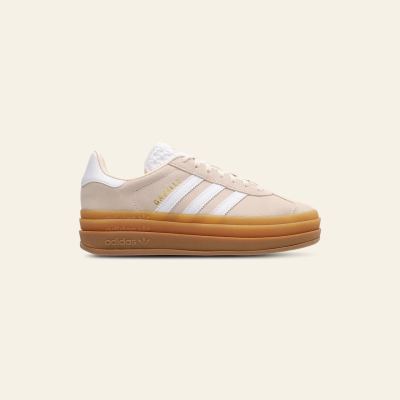
The Adidas Samba and Adidas Gazelle get lumped together constantly because they’re both low-profile suede-and-leather retro trainers from the same football heritage — but they were designed for different surfaces, and that history still shapes how they look, fit and wear today. Here’s what actually separates them.

Key Takeaways
- The Samba is older: it launched in 1950 as an indoor football shoe for icy pitches, with the modern version dating to 1972. The Gazelle followed in 1966 as a training shoe.
- The Samba OG uses a full leather upper with a reinforced suede toe overlay; the Gazelle is built mostly from suede, which feels softer immediately but wears less durably over time.
- The Gazelle tends to run narrow and fits slightly large according to independent shoe testing, while the Samba fits closer to true to size with a snugger, more tapered toe box.
- Neither shoe was designed for outdoor running or long-distance walking — both have thin, minimally cushioned soles built for court or indoor surfaces, now worn as lifestyle sneakers.
Quick Comparison: Adidas Samba vs Gazelle
| FEATURE | ADIDAS SAMBA | ADIDAS GAZELLE |
|---|---|---|
| Original release | 1950 (modern version 1972) | 1966 |
| Original purpose | Indoor football, icy pitches | Training shoe |
| Upper material | Leather, suede T-toe overlay | Suede, leather Three Stripes |
| Weight (US men’s 9) | ~12.1 oz (342g) | ~13.0 oz (369g) |
| Fit | True to size, narrower, tapered toe | Runs slightly large, narrow platform |
| Durability | Higher (leather-dominant) | Lower (suede wears faster) |
Silhouette: How Do They Actually Look Different?
Side by side, the clearest tell is the toe: the Samba has a distinctive notch on its eyestay panels and a reinforced, slightly domed suede T-toe overlay built for ball control. The Gazelle’s eyestay panels run straight, its toe box is shorter and more streamlined, and the midfoot sits a little bulkier. The Samba’s silhouette is narrower and more tapered overall; the Gazelle reads as rounder and softer.
History: Where Did They Actually Come From?
The Samba is the older of the two by 16 years. Adidas introduced it in 1950 as a football boot designed specifically for training and playing on icy, frozen pitches, using an outsole with rubber suction cups for grip on hard, slippery ground. The modern Samba most people recognize today, with its gum rubber outsole and T-toe overlay, arrived in 1972. Contrary to a common assumption, the Samba’s name has no connection to the Brazilian dance style or the World Cup — it came out of German football innovation. The Gazelle followed in 1966 as a dedicated training shoe, originally released in two versions: a red model with a transparent herringbone sole built for indoor sports, and a blue model with a microcellular rubber outsole for general training use.
Construction and Materials
The Samba OG leans on leather as its primary upper material, with suede reserved mainly for the toe overlay — a combination that holds its shape and resists wear better over time. The Gazelle flips that ratio, using suede as the dominant material with leather appearing mainly on the Three Stripes branding. Suede feels softer and more broken-in from the first wear, but it marks and degrades faster than the Samba’s leather-forward build, particularly with regular outdoor use.
Sole: What’s Actually Underfoot?
The Samba runs on a gum rubber outsole with minimal cushioning — independent testing measures its heel stack at around 19.3mm, noticeably thinner than an average sneaker. The Gazelle’s rubber outsole with a hexagonal tread pattern sits a bit taller, around 23.3mm at the heel, and is described as more durable but less supple underfoot than the Samba’s thinner sole. Neither shoe has meaningful cushioning by modern sneaker standards; both were built for court and training surfaces, not distance walking or running.
Fit and Comfort
The Samba fits true to size for most people, with a narrower, more tapered toe box that suits medium-to-narrow feet best. The Gazelle tends to run slightly large and narrow at the same time — a combination that can catch people off guard, since “runs large” doesn’t automatically mean “roomy.” If you have wider feet, neither shoe is especially forgiving; sizing consistency and trying a half size up in the Gazelle specifically is worth considering given its narrow platform.
Styling and Everyday Use
Both work well with straight-leg and wide-leg trousers, largely because their low-profile shape doesn’t compete with fuller leg openings the way a chunkier sneaker would. The Samba’s cleaner, leather-forward look pairs slightly better with more tailored or minimal outfits, while the Gazelle’s suede texture and softer silhouette lean a touch more casual. If you want more detail on wearing either without looking dated, see our guide on how to style retro sneakers without looking dated.
So, Which Should You Buy?
Neither model is the better choice outright — it depends on what you value more.
- Choose the Samba if: you want the more durable, leather-forward build, a narrower and more true-to-size fit, or a slightly cleaner, more minimal look.
- Choose the Gazelle if: you prefer a softer suede texture out of the box, don’t mind sizing carefully around its narrow-but-large fit, and want a rounder, more casual silhouette.
- If you’re deciding between a Samba or Gazelle and something newer like the Nike Air Force 1, our Nike Air Force 1 vs Adidas Samba comparison covers that decision directly.
Weighing up a third option? Our Adidas Campus vs Samba comparison breaks down how the Campus fits into the mix.
Frequently Asked Questions
Is the Adidas Samba or Gazelle older?
The Samba is older. It was introduced in 1950 as an indoor football shoe, 16 years before the Gazelle launched in 1966 as a training shoe.
Does the Gazelle run true to size?
Not exactly — independent testing found the Gazelle fits slightly large while also running narrow through the platform, so trying a half size down (or being extra mindful of width) is worth doing before buying.
Is the Samba or Gazelle more durable?
The Samba tends to last longer because its upper is leather-dominant with suede limited mainly to the toe. The Gazelle’s suede-forward upper looks and feels great early on but shows wear faster with regular use.
Were the Samba and Gazelle designed for the same sport?
No. The Samba was built specifically for indoor football on icy or slippery surfaces, while the Gazelle was designed as a general training shoe, originally offered in separate indoor and training-specific versions.
Can you wear Sambas or Gazelles for walking all day?
Not comfortably for long distances. Both have thin, minimally cushioned soles built for court and training surfaces rather than all-day walking. For that use case, see our guide to what actually matters in a walking sneaker.
Shop Adidas Samba & Gazelle
Adidas Samba
For the full story on where the Samba came from and how it fits, see our complete guide to the Adidas Samba.
Adidas Gazelle
Comments
3 responses to “Adidas Samba vs Gazelle: What’s the Difference?”
[…] deciding between retro Adidas models? Our Samba vs Gazelle comparison covers a third popular […]
[…] to decide between the Samba and its closest sibling? Read our Adidas Samba vs Gazelle comparison for a full […]
[…] Nike side of this decision, see our Nike Dunk Low vs Air Force 1 comparison, or our breakdown of Adidas Samba vs Gazelle if you want to stay within the Adidas retro […]