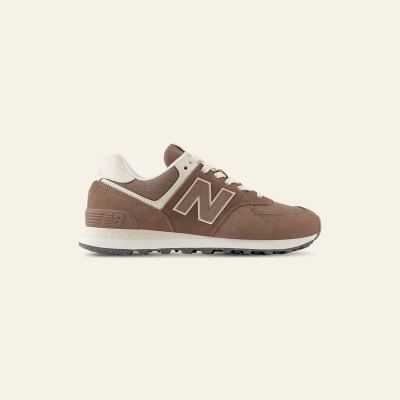

The New Balance 574 was released in 1988 as part of New Balance’s 500 series, a line originally built for off-road and trail running rather than lifestyle wear. Its defining feature was ENCAP technology: a soft EVA foam midsole surrounded by a firmer plastic ring at the heel, designed to add stability on uneven terrain while keeping the ride cushioned. The shoe’s original modest grey colorway, paired with genuinely comfortable everyday wear, became its signature look and helped it outlast the trail-running trend it was built for. Decades later, the 574 remains in New Balance’s lineup and has expanded well beyond its original running roots into golf, skate, and platform-soled variants.
Key Takeaways
- The 574 launched in 1988 as part of New Balance’s budget-friendly 500 series, aimed at off-road and trail running.
- ENCAP technology — soft EVA foam wrapped in a firmer plastic heel ring — was the shoe’s core innovation for stability on rough terrain.
- The understated grey colorway plus reliable comfort became the model’s lasting signature, beyond any single performance feature.
- The 574 has since expanded into golf, skate, and platform variants well outside its original running use case.
- Its continued relevance today owes more to comfort and simple styling than to any specific technical running performance claim.
574 At a Glance
| Aspect | Detail |
|---|---|
| Release year | 1988 |
| Original series | New Balance 500 series (off-road / trail running) |
| Core technology | ENCAP: soft EVA midsole + firmer plastic heel ring |
| Signature look | Modest grey colorway, understated design |
| Modern variants | Golf, skate, and platform-soled editions |
What made the original 574 different?
Direct answer: the 574’s ENCAP midsole construction, combining soft EVA foam with a firmer plastic ring around the heel, was designed to give trail runners added stability without sacrificing cushioning.
Explanation: off-road running in the late 1980s demanded a shoe that could absorb impact on uneven ground while still keeping the foot controlled, and ENCAP’s dual-density approach addressed both needs in a single midsole rather than relying on cushioning alone.
Nuance: this was a running-oriented design decision, not a lifestyle one — the 574’s move into everyday and fashion wear happened later, once wearers found the same comfort and stability useful off the trail too.
Recommendation: if you’re drawn to the 574 specifically for its heritage design, look for versions that keep the original ENCAP-style construction rather than purely cosmetic reissues.
Why has the 574 stayed relevant for decades?
Direct answer: the 574’s modest grey colorway combined with all-day comfort became its defining trait, which is why it outlasted the specific trail-running trend it was originally designed for.
Explanation: unlike shoes built around a single performance claim, the 574’s low-key aesthetic aged well and became easy to pair with casual, everyday outfits long after trail running moved on to newer technology.
Nuance: its longevity is a matter of consistent comfort and understated style rather than any single record-setting technical spec — there isn’t a dramatic performance claim behind its staying power, just reliability.
Recommendation: if you want the classic look, the grey colorways remain the most true-to-original choice; if you want something more expressive, the newer golf, skate, and platform variants offer that without abandoning the base silhouette.
Frequently Asked Questions
When was the New Balance 574 first released?
It was released in 1988 as part of New Balance’s 500 series.
Was the 574 originally a running shoe?
Yes — it was designed for off-road and trail running, not as a lifestyle sneaker, though it’s now worn primarily as an everyday shoe.
What is ENCAP technology?
It’s New Balance’s midsole construction from this era, using a soft EVA foam core surrounded by a firmer plastic ring at the heel for added stability.
Are there non-running versions of the 574 now?
Yes, the silhouette has expanded into golf, skate, and platform-soled variants over the years.
Is the grey colorway the “original” 574?
The understated grey look is the most closely associated with the shoe’s original identity and signature style, though many colorways have been released since.
Is the 574 still a performance running shoe today?
It’s generally worn as an everyday lifestyle shoe now rather than a dedicated performance trainer, even though its original design purpose was trail running.
Deciding between silhouettes? Our comparison of New Balance 9060 vs 574 vs 530 breaks down which one fits your needs.
Curious to try a pair? Cecile Milan carries New Balance shoes for men and New Balance shoes for women.