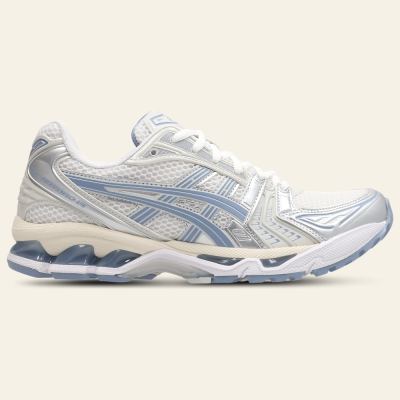
The Gel-Kayano and Gel-Nimbus are ASICS’s two flagship cushioned trainers, and the choice between them comes down to one question: do you overpronate or have unstable ankles that need guidance, or do you have a neutral stride that just wants maximum softness? The Gel-Kayano 32 is ASICS’s stability shoe, built around a dual-layer FF Blast Max and FF Blast foam setup with a firmer medial wedge and a wide, stable base to guide your gait through long miles. The Gel-Nimbus 28 is the neutral counterpart, using a single-layer FF Blast+ foam and a PureGEL heel unit for what ASICS describes as a lightweight, cloud-like feel, without any structured support built in. Neither is “better” in the abstract – picking the wrong one, especially skipping stability features you actually need, is the real mistake to avoid.

Key Takeaways
- Gel-Kayano 32: stability shoe, dual-layer FF Blast Max + FF Blast foam, firmer medial wedge, wide stable base, roughly 10.5oz, 8mm drop.
- Gel-Nimbus 28: neutral shoe, FF Blast+ foam with a PureGEL heel unit, roughly 9.6oz (lighter than the Kayano), 8mm drop.
- Kayano’s engineered mesh upper gives a roomier fit; Nimbus’s knitted upper with a flat knit tongue runs narrower.
- Both are highly cushioned and both suit long-distance training – the real difference is stability support, not comfort level.
- If you don’t know whether you overpronate, that’s worth checking (via a gait analysis at a running store or with a physiotherapist) before choosing based on price or looks alone.
Gel-Kayano 32 vs Gel-Nimbus 28: Spec Comparison
| Spec | Gel-Kayano 32 | Gel-Nimbus 28 |
|---|---|---|
| Type | Stability | Neutral |
| Weight | ~10.5oz | ~9.6oz |
| Heel-to-toe drop | 8mm | 8mm |
| Midsole foam | Dual-layer FF Blast Max + FF Blast | FF Blast+ with PureGEL heel unit |
| Upper | Engineered mesh, roomier fit | Knitted material, flat knit tongue, narrower fit |
| Best for | Runners who overpronate or have unstable ankles needing guidance | Neutral runners wanting maximum plush cushioning |
How Do You Know If You Need a Stability Shoe Like the Kayano?
Direct answer: If you overpronate significantly (your foot rolls inward excessively after landing) or have a history of ankle instability, a stability shoe like the Kayano is designed specifically to guide your gait and reduce that excess motion.
Explanation: ASICS built the Kayano around a firmer medial wedge (on the inner side of the midsole) and a wider base specifically to resist inward rolling and keep your foot tracking more neutrally through your stride, which is the core job of any stability running shoe.
Nuance: Not everyone who pronates needs a stability shoe – mild pronation is normal and part of how the foot absorbs impact. The distinction that matters is excessive or uncontrolled pronation, which is genuinely hard to self-diagnose accurately; a proper gait analysis is more reliable than guessing from how your old shoes wore down.
Recommendation: If you’ve never had a gait analysis and aren’t sure, it’s worth getting one done before assuming you need either shoe – running stores that sell both models can typically do a basic version in-store.
Is the Gel-Nimbus Too Soft for Serious Training?
Direct answer: No – “soft” cushioning and “serious” training aren’t opposites; the Nimbus is specifically positioned by ASICS for long-distance training on pavement, where sustained cushioning matters more than a firm, responsive ride.
Explanation: The Nimbus’s FF Blast+ foam and PureGEL heel unit are designed to absorb repeated impact over high-mileage runs, which is exactly the demand of serious distance training – the softness is functional, not just a comfort gimmick.
Nuance: Where a firmer shoe has an edge is in faster-paced sessions where you want more energy return and ground feedback; the Nimbus, like most max-cushion neutral shoes, is better suited to easy and moderate paces than to tempo work or racing.
Recommendation: If most of your mileage is easy-to-moderate distance running and you’re a neutral runner, the Nimbus is a legitimate serious-training shoe, not just a recovery-day option.
Frequently Asked Questions
Can a neutral runner wear the Gel-Kayano without issue?
Generally yes, though the firmer medial wedge built for stability may feel slightly less plush or slightly more directive underfoot to a neutral runner than a dedicated neutral shoe like the Nimbus.
Is the Gel-Kayano heavier than the Gel-Nimbus?
Yes – the Kayano’s dual-layer foam setup and additional stability structures add roughly 0.9oz compared to the Nimbus, a difference some runners notice over long distances and others don’t.
Do both shoes have the same heel-to-toe drop?
Yes, both sit at 8mm, so the difference in feel comes from the foam and structure, not from a different ramp angle between heel and forefoot.
Which shoe fits wider feet better?
The Kayano’s engineered mesh upper generally runs roomier than the Nimbus’s knitted upper, which has a narrower, more sock-like fit – worth trying both in-store if you have wider feet.
Are these shoes good for walking, not just running?
Both work well for walking given their high cushioning levels, though the Kayano’s stability features are specifically more useful if you also have gait issues that show up while walking, not just running.
How do I decide between the two if I’ve never had gait issues?
If you have no history of overpronation or ankle instability, the Nimbus’s neutral cushioning is the simpler default choice; only reach for the Kayano’s stability features if you have a specific reason to want them.
If you’re after ASICS style rather than performance, our Gel-1130 vs Gel-NYC comparison covers the retro, lifestyle-focused side of the ASICS lineup.
Try both for yourself: Cecile Milan stocks ASICS for women and men.
Comments
One response to “ASICS Gel-Kayano vs Gel-Nimbus: Which Should You Buy?”
[…] for a performance running pair instead of a retro lifestyle one? Our Gel-Kayano vs Gel-Nimbus comparison covers ASICS’ stability and neutral training […]